From Group Stage to Knockout: How Two Competition Shapes Change the Stakes
Group stage and knockout formats reward different habits: learn how each round shapes pressure, planning, and the path teams must take to advance.
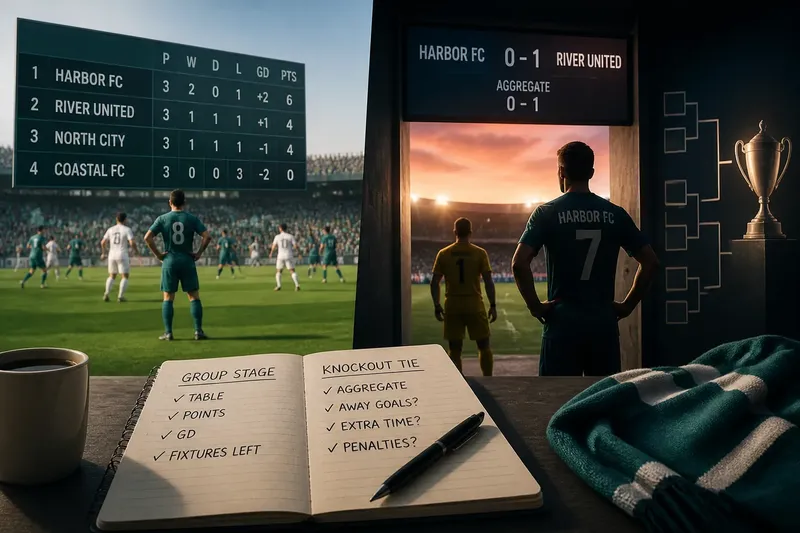
Group stage and knockout formats ask teams to solve different problems: group play rewards consistency across several matches, while a knockout tie can end a campaign in a single bad afternoon. Follow the competition one round at a time, and the change in pressure becomes easier to hear in the commentary and see in the choices on the pitch.
Group play turns a schedule into a small league
A group stage gathers a set of teams into a shared table. Each side plays the others according to a schedule, and results accumulate rather than wiping the slate clean after every match. A win, draw, or loss changes a team’s position, but usually leaves it another chance to improve that position later.
This structure grew from a familiar league idea: compare competitors through repeated fixtures, not one isolated meeting. In many competitions, groups provide a way to give each participant several opponents before the field narrows. The exact number of teams, matches, and qualifiers depends on the organizer, so the table’s rules matter as much as its shape.
Standings commonly begin with points earned for results. If teams finish level, organizers apply a stated sequence of tiebreakers. Those might consider goal difference, goals scored, or results between the tied teams, but the order varies. A fan who knows the sequence can tell why a late goal matters beyond the scoreline.
Group matches create a changing calculation. Early on, teams may prioritize a solid start. Later, one side might need a win to keep control of its fate, while another can advance with a draw. A match between teams with different needs can therefore look cautious on one side and urgent on the other.
Check the table and the remaining fixtures together; the same result can mean different things to teams with different schedules.
Knockout rounds make each tie a direct test
In a knockout round, the winner advances and the loser is eliminated. The format gives each match a sharper edge: there may be no later fixture in which to recover. That pressure can change how teams manage risk, particularly when the score is close near the end.
A knockout round can be a single match or a two-leg tie. In a single match, the competition’s rules determine what happens if the teams are level after normal time. Extra time and a penalty shootout are possible deciders, but not every competition uses the same procedure.
In a two-leg tie, each team hosts one match, and the combined score across both fixtures determines who advances. If the aggregate score is level, the regulations specify the next decider. Away-goal rules have been used in some formats, but readers should not assume they apply; check the competition’s published rules.
The second leg carries a distinctive rhythm because teams know the first-leg score. A team ahead on aggregate may defend space and limit exposure. The side behind may press for a goal, while staying alert to the possibility that another concession would make the task harder. Those are incentives, not fixed scripts: tactics and personnel still shape the actual match.
A competition’s calendar shapes its emotional arc
Group play usually spreads uncertainty over a sequence of matches. A team can stumble and still recover, but a poor run may leave too much ground to make up. Supporters learn to watch several things at once: their team’s result, rival results, and the remaining fixtures.
Knockout play compresses that uncertainty. The draw can determine which opponents meet and when, while the bracket offers a visible route toward the final. One upset can remove a favorite; one narrow win can carry a team forward without settling whether it is the stronger side over a longer schedule.
Imagine a fictional group in which Harbor FC loses its opening match, then wins the next. Its supporters would check the table and remaining fixtures before deciding whether the team still controls its path. If Harbor later reaches a two-leg knockout tie and trails by one goal after the first match, the second leg presents a different immediate task: score enough to change the aggregate balance, while avoiding a concession that deepens the deficit.
That shift is the format’s central contrast. Group tables ask, “What can this team build across the schedule?” Knockout ties ask, “What must happen for this team to survive this round?”
How should you follow group and knockout formats?
What does a team need to advance from a group?
It depends on the competition’s qualification rules and the current table. Check how many teams advance, the tiebreaker order, and the remaining fixtures before treating any result as decisive.
Why can a draw matter differently late in group play?
A draw adds a result to the table, but its value depends on the teams’ positions and what each still needs. One side might welcome it while another needs a win to improve its chances.
How is a two-leg knockout tie decided?
The teams’ goals across both matches are generally combined to produce an aggregate score. If that score is level, the competition’s rules state whether extra time, penalties, or another method decides the tie.
Does a knockout defeat always mean the team played worse?
No. A single match or short tie can turn on a small number of moments, while group play offers a broader record across several opponents. The format tells you how the result determines advancement, not how to judge every aspect of performance.
Follow a simple routine through each round
A small viewing routine helps keep the format in focus without turning every match into a spreadsheet. Use the same checks as a competition moves from group play toward elimination rounds:
- Before a group match: Find the team’s position, its points, and the number of fixtures left. This shows whether the match is an early opportunity or a late chance to change the table.
- When checking a tiebreak: Read the competition’s rules in order. Do not infer advancement from goal difference alone if another criterion comes first.
- After a group result: Update the table and look at the next opponents. A win can help, but the remaining schedule may still leave a difficult route.
- Before a knockout tie: Confirm whether it is one match or two and what happens if the teams finish level. That tells you what the players are actually playing for at the end.
- Before a second leg: Note the aggregate score and the stated decider. Track how each team’s incentives may change as the score moves.
- After elimination: Separate the format’s verdict from a broader judgment of the team. Advancement ends one path; it does not explain everything about the performance.
Competition rules can change between events, so the organizer’s regulations settle details such as tiebreakers and extra-time procedures.
Read the format before reading the drama
The group stage and knockout rounds are not simply longer and shorter versions of the same contest. Group play measures a team against a schedule and keeps the table alive across results. Elimination play narrows the question to who advances from a particular match or tie.
For a reader learning football formats, the useful habit is to identify the decision the rules require next. Is the team trying to climb a table, protect a qualification place, level an aggregate score, or survive a decider? Once that is clear, a cautious pass, a late attacking change, or a tense final stretch has a sharper meaning—and the competition’s structure becomes part of the match rather than background noise.