The Goalkeeper’s View of a Back Pass
The goalkeeper’s view of a back pass turns on how the ball arrives: learn when a deliberate teammate kick limits handling and what the keeper can do instead.
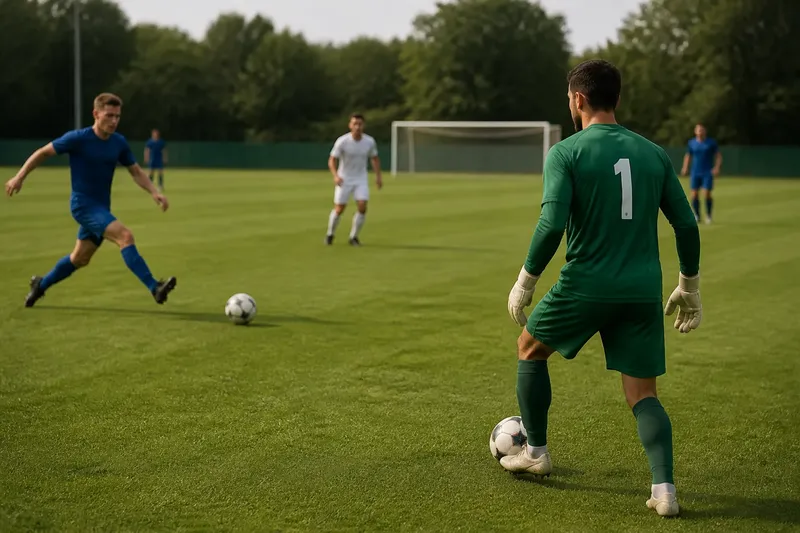
A goalkeeper may not pick up a ball deliberately kicked to them by a teammate, even if the pass is awkward or an opponent is closing in. The keeper may still play it with their feet or another permitted body part. To follow the decision, trace how the ball reached the goalkeeper rather than judging by its direction alone.
That distinction is narrower than the phrase “back pass” suggests. A ball moving toward a team’s own goal does not automatically trigger the restriction. The relevant question is whether a teammate deliberately kicked the ball to the goalkeeper, or deliberately used a throw-in to send it there. The precise action matters, especially if an opponent touches the ball in between.
A deliberate teammate kick limits the goalkeeper’s use of hands
Suppose a defender sees pressure, sets the ball, and intentionally kicks it toward their goalkeeper. The keeper may control or clear it with their feet, but may not handle it directly while the restriction applies. If the keeper does, the referee awards an indirect free kick to the opposing team.
“Deliberate” describes the teammate’s action, not the quality of the pass. A gentle roll, a sliced clearance, or a hurried toe-poke can count if the player intentionally kicked the ball to the keeper. The pass need not travel backward, either. A teammate could kick it sideways or forward into the keeper’s path; direction alone does not decide the call.
The keeper can pass to a defender, move the ball into space, or kick it long. The restriction concerns handling, not receiving or playing the ball in general.
An opponent’s touch does not always reset the restriction
A ball deliberately played by an opposing player is not covered by the teammate back-pass restriction. But a slight touch, deflection, or rebound off an opponent does not necessarily erase the effect of a teammate’s deliberate kick. The referee must judge whether the opponent made a deliberate play of the ball, rather than merely touching it as the ball passed.
If an opponent clearly attempts to play the ball, the restriction may no longer apply, depending on the nature of that action and the relevant law. A graze or ricochet alone is not enough to assume the keeper can handle it. The referee judges the specific sequence.
For viewers, trace the ball’s route and ask what each player actually did. Did the opponent deliberately play the ball, or did it simply brush them on its way to the keeper?
A deflection or miskick differs from an intentional pass
A teammate may try to clear the ball and miss, or the ball may bounce off a leg without a deliberate kick to the keeper. A mere deflection is not the same as an intentional pass. If the keeper handles a ball that arrived only through an accidental touch, the back-pass restriction does not apply on that basis alone.
A poor outcome does not erase clear intent. Imagine a defender means to pass to the keeper, but the ball catches a bobble and rolls weakly across the grass. The action still began as a deliberate kick to the keeper, so the keeper must not handle it. Conversely, if the defender swings at a clearance and the ball clips their boot unintentionally, the referee may judge that no deliberate pass occurred.
When the touch is hard to read, look at the player’s movement and apparent aim. These clues can help explain the call, but the referee decides what happened.
A deliberate teammate throw-in has its own handling restriction
If a teammate throws the ball directly to the goalkeeper from a throw-in, the keeper cannot handle it. They can still control or play it with their feet, subject to the other rules. An accidental touch after the throw does not automatically make every route to the goalkeeper illegal to handle.
A throw-in is not a kick, but it has its own restriction. A teammate’s ordinary header back to the keeper does not fall under the deliberate-kick restriction, although other laws can apply if players use a trick to evade the restriction.
Outfield players have no special back-pass handling restriction
An outfield player may use a hand or arm only within the limits of the handball rules; the back-pass restriction gives them no separate right to handle the ball. The difference is that the goalkeeper has special permission to handle the ball in their own penalty area, and that permission is limited when a teammate deliberately kicks or throws it to them in the specified ways.
If a defender passes to another defender, the receiving player has no back-pass rule to consider. If the pass reaches the goalkeeper, the keeper must distinguish between playing it with the feet and picking it up. The same teammate action can therefore create a handling issue for the keeper that does not exist for an outfield teammate.
Which details decide whether the keeper may handle the ball?
Does every ball that rolls toward the keeper count as a back pass?
No. Direction alone is not enough. The restriction concerns a deliberate teammate kick to the goalkeeper or a deliberate teammate throw-in to the goalkeeper.
Can the goalkeeper kick a deliberate pass back?
Yes. The keeper may play it with their feet or another permitted body part. The restriction is on handling, not on receiving or kicking the ball.
What if the defender did not mean to pass to the keeper?
An accidental deflection or miskick does not, by itself, trigger the restriction. The referee considers whether the teammate deliberately kicked the ball to the keeper, rather than relying only on where it ended up.
What happens if the goalkeeper handles a restricted pass?
The opposing team receives an indirect free kick from the place where the handling offense occurred, subject to special placement rules that may apply inside the goal area. A goal cannot be scored directly from that restart.
Trace the keeper’s handling back to the teammate’s action
Say a defender under pressure deliberately nudges the ball toward their keeper. The keeper stops it with a foot, then picks it up. Because the keeper handled a ball from a deliberate teammate kick, the expected decision is an indirect free kick for the opponents; the pressure, short distance, and gentle touch do not by themselves change that.
When a keeper gathers the ball, trace the sequence backward: who touched it, whether that touch was a deliberate kick or throw-in, and whether an opponent made a deliberate play in between. For a disputed call in a particular competition, consult the current Laws of the Game and local competition guidance, since the precise action and location can affect the decision or restart placement.